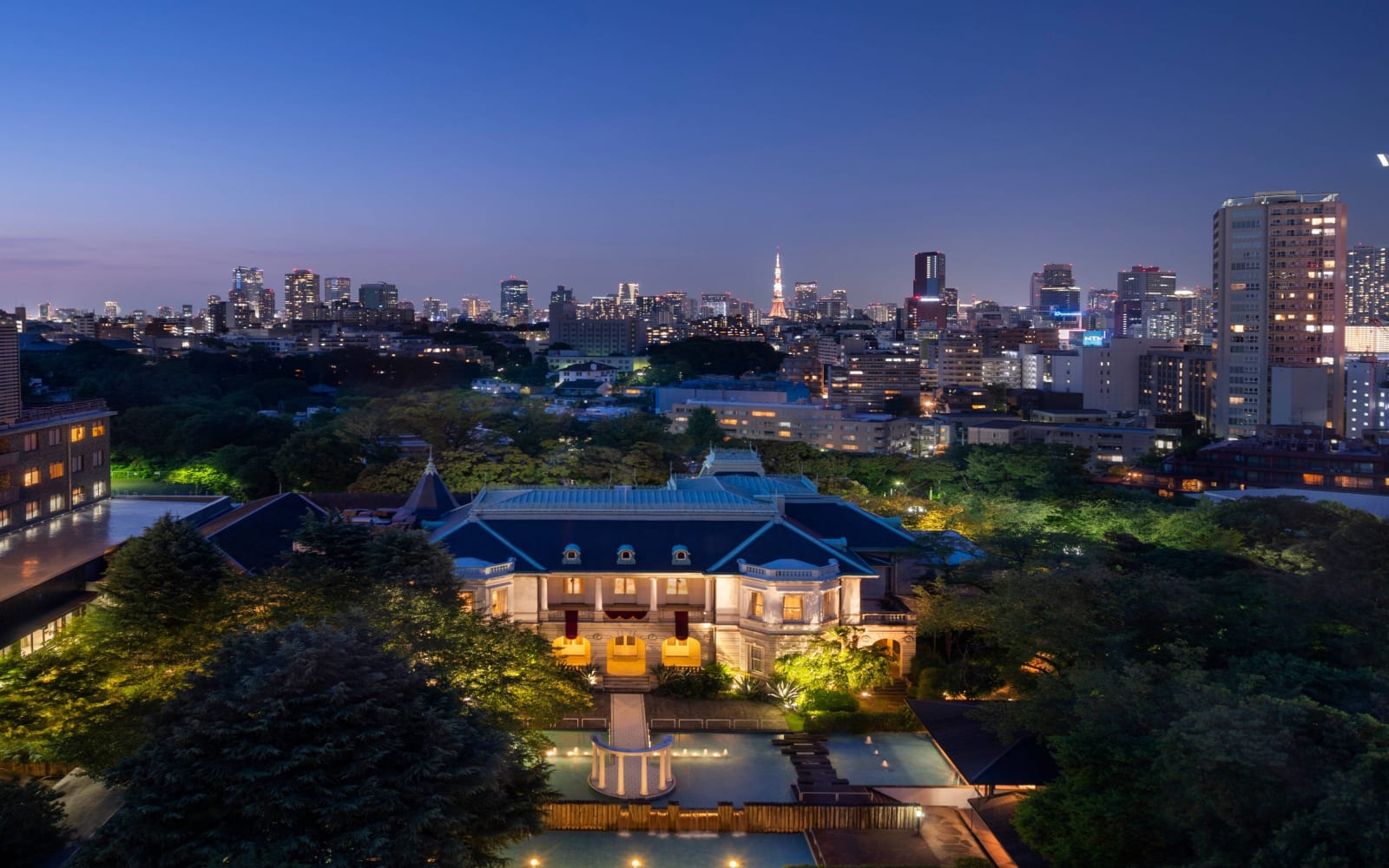
How far is it from the Shinkansen platforms at Shinagawa Station to a 20,000 square meter Japanese garden? Three minutes, uphill. The slope is called Sakura-zaka, the cherry blossom slope, and The Prince Sakura Tower Tokyo takes its name from it. The land was once the residence of an imperial prince. The tower dates from 1998. The garden is older than the tower by close to a century.
One page per facility: rooms that start at 46 square meters, a lounge that runs its day in four parts, two more lounges across the garden, and foliage that starts turning in late November. Thirteen pages, about thirty minutes.
The last page has a tickable list of twelve things. One of them is ringing the bell of a belfry built in 1656, by hand. It is free, and most guests never learn they can. Take your time with the list.
01 · The basics
A three minute climb, a hundred year garden
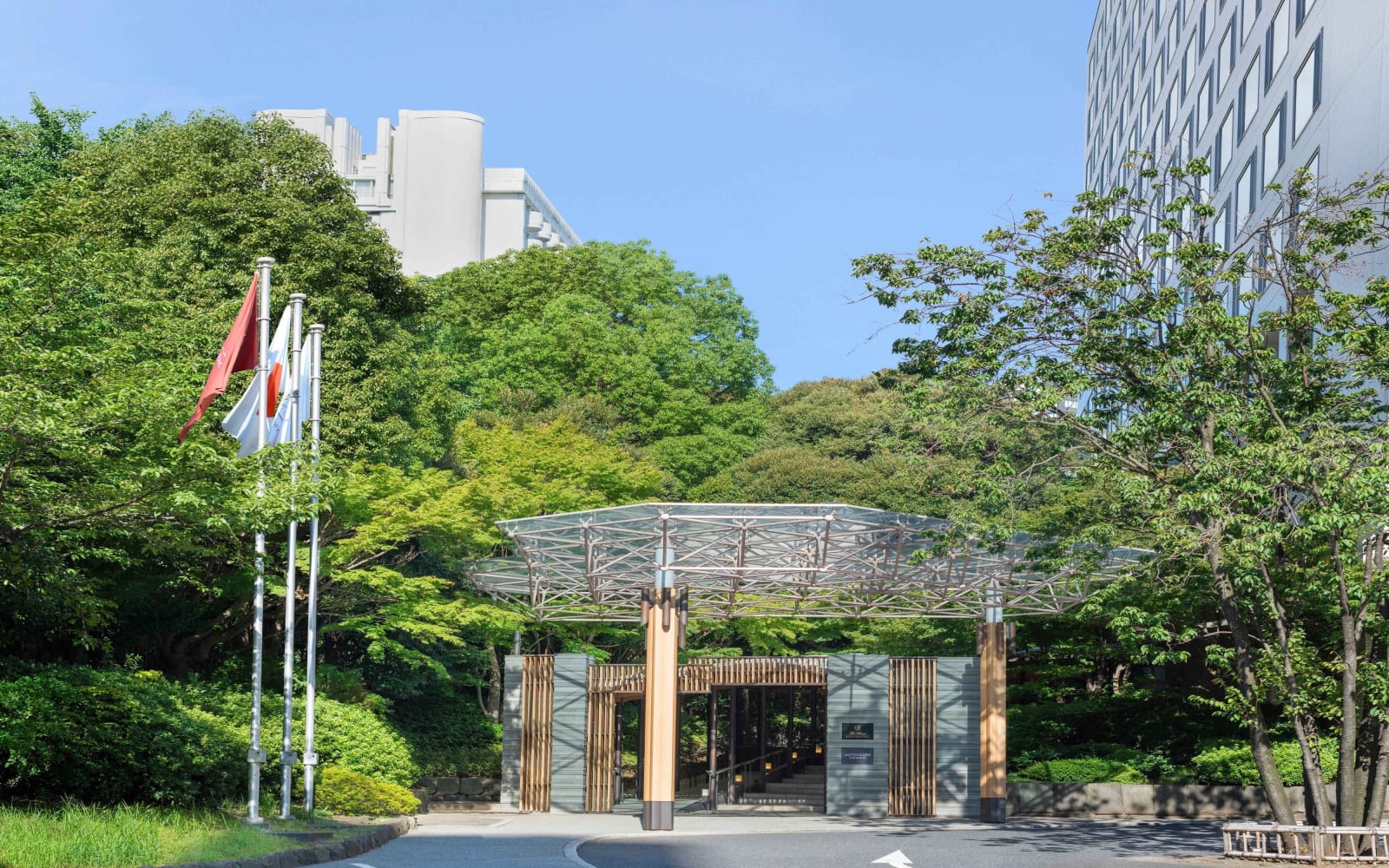
Leave Shinagawa Station by the Takanawa exit and walk up Sakura-zaka. The hotel says three minutes. Japanese reviewers have timed it closer to six with luggage, because the three minutes is map distance and the Takanawa plateau adds a slope the map does not show. The top of the slope and the bottom are two different worlds. The bottom is one of Tokyo's busiest interchanges. The top is quiet enough to hear trees.
| Opened | October 2, 1998, as the Takanawa Prince Hotel Sakura Tower. Renovated throughout and relaunched on September 14, 2013 as the first Autograph Collection hotel in Japan |
|---|---|
| Size | 288 rooms on floors 4 through 14, with the main room type at 46 square meters |
| Design | The 2013 renovation was directed by Ryu Kosaka of A.N.D., with in-room art by kimono designer Jotaro Saito and lighting by Masanobu Takeishi. Forbes Travel Guide four stars |
| Group | Owned and run by Seibu's Prince Hotels, flying Marriott's Autograph Collection flag. Two sister hotels, Grand Prince Takanawa and Grand Prince Shin Takanawa, share the same garden |
| Address | 3-13-1 Takanawa, Minato-ku, Tokyo 108-8612 |
| Phone | +81-3-5798-1111 |
| Check-in and out | Check-in 15:00, checkout 12:00. A noon checkout is on the generous side for Tokyo |
| Getting there | About 3 minutes on foot from Shinagawa Station's Takanawa exit, uphill, so allow 6 with luggage; about 5 minutes from Takanawadai Station exit A1 on the Asakusa subway line. Haneda Airport is about 14 minutes to Shinagawa on the Keikyu line. A free shuttle bus loops the Takanawa Prince hotels from Shinagawa Prince Hotel |
| Parking | About 1,000 spaces shared by the three hotels, about US$9 per night for guests on a 24 hour basis |
The lobby is on the ground floor and keeps a tower's density; the ballroom grandeur the Prince brand is known for stays with the two sister hotels. The 2013 renovation layered kimono weave patterns, indirect lighting, and dark wood through the public spaces, and it has aged better than most work of that decade.
All amounts in this article are in US dollars, converted where marked "about" at roughly 160 yen to the dollar as of August 30, 2026 (XE mid rate 160.10, TradingEconomics 159.97). Unmarked amounts are native US dollar quotes.
- BookingDecide first whether you want the executive floors, 11 through 14. That choice settles lounge access, and page 04 lays it out.
- By trainGet off at Shinagawa, not Tokyo Station. Take the Takanawa exit and turn right up the slope.
- With luggageThe slope is short but real. A taxi from the station arrives on the base fare, or wait for the free shuttle at Shinagawa Prince.
02 · Rooms
Forty six square meters, drawn in 1998
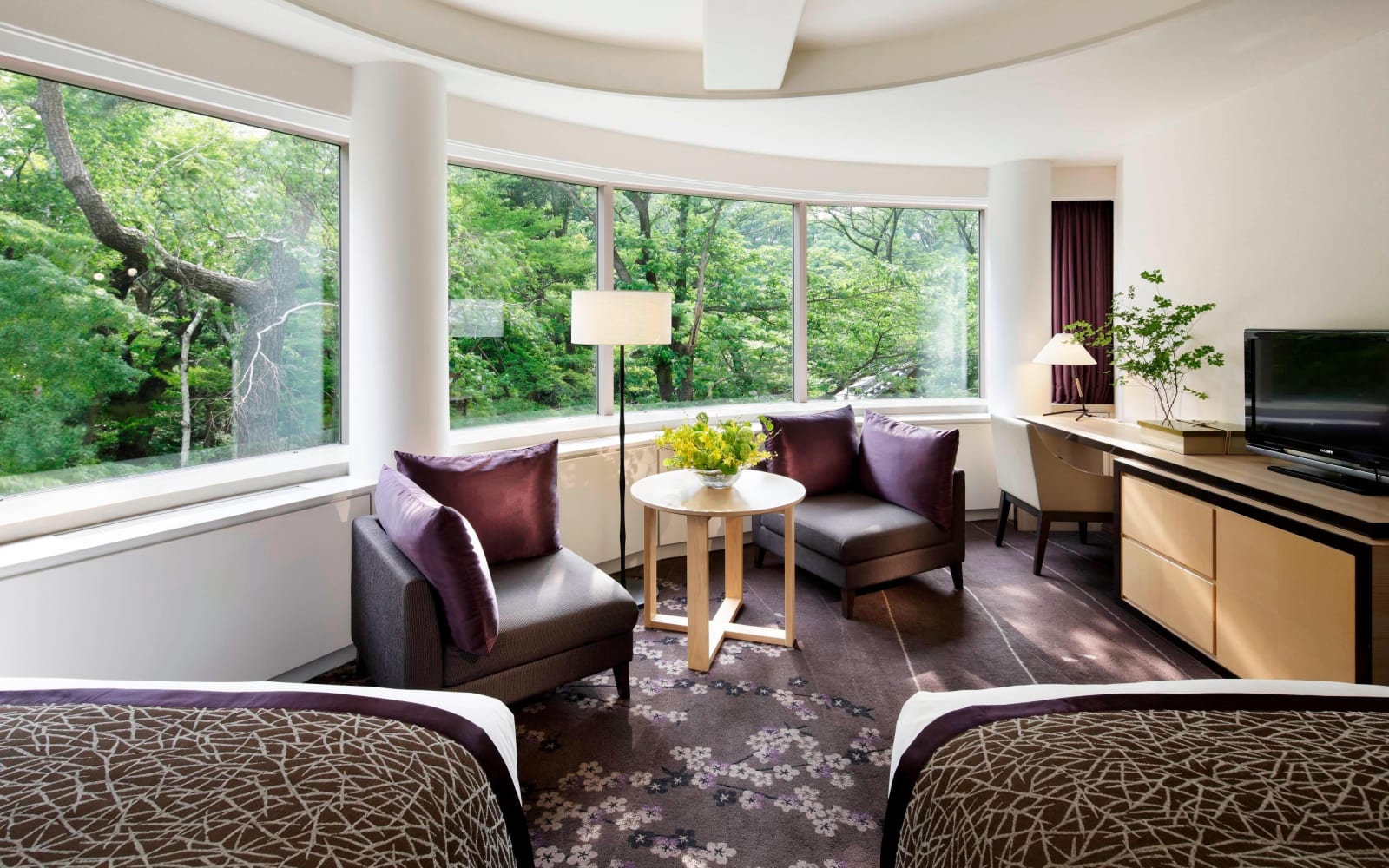
All 288 rooms start large. The main room type is 46 square meters and the smallest, the Corner King, is about 40. In today's Tokyo that is a luxury: new hotels in the same price band mostly run 25 to 35 square meters. The size is an inheritance from 1998, when the land was the company's own and the floor plates did not need to be squeezed.
| Floor grades | Floors 4 to 8 standard, 9 to 10 Upper, 11 to 14 executive floors with lounge access |
|---|---|
| Orientation | One face looks toward Tokyo Tower and the skyline, guaranteed on Tower View room types; the other looks over the garden toward Shinagawa |
| Suites | Junior Suites from about 53 square meters, and an 86 square meter Sakura Suite on 14 |
| Bedside | USB sockets at the headboard. Turndown leaves a weather card for the next day and a chocolate |
One thing to know before booking
Some rooms currently look onto neighboring redevelopment sites. The Shinagawa and Takanawa districts are in the middle of a major land readjustment, and the hotel posted a notice about adjacent construction in 2025. This is the district's condition for the next few years rather than bad luck. If the window matters, book a Tower View category with its guaranteed orientation, or write ahead and ask to face away from the works.
Accessibility
A 46 square meter Universal Room on floor 4 has a lowered bed and washbasin, a shower room plus tub, and a washlet. Marriott's listing adds accessible parking and service animal acceptance. Hearing devices and wheelchair loans do not appear on the published lending list, so call ahead if you need them.
- BookingIf the view matters, lock in Tower View. The premium is small and it buys a guarantee.
- On arrivalOpen the curtains first and see which face you have, then decide where tomorrow's coffee happens, in the room or down in the garden.
- Three peopleThe Deluxe Triple takes a third bed without feeling crowded. This is where 46 square meters earns its keep.
03 · Bathroom
The tub that blows bubbles
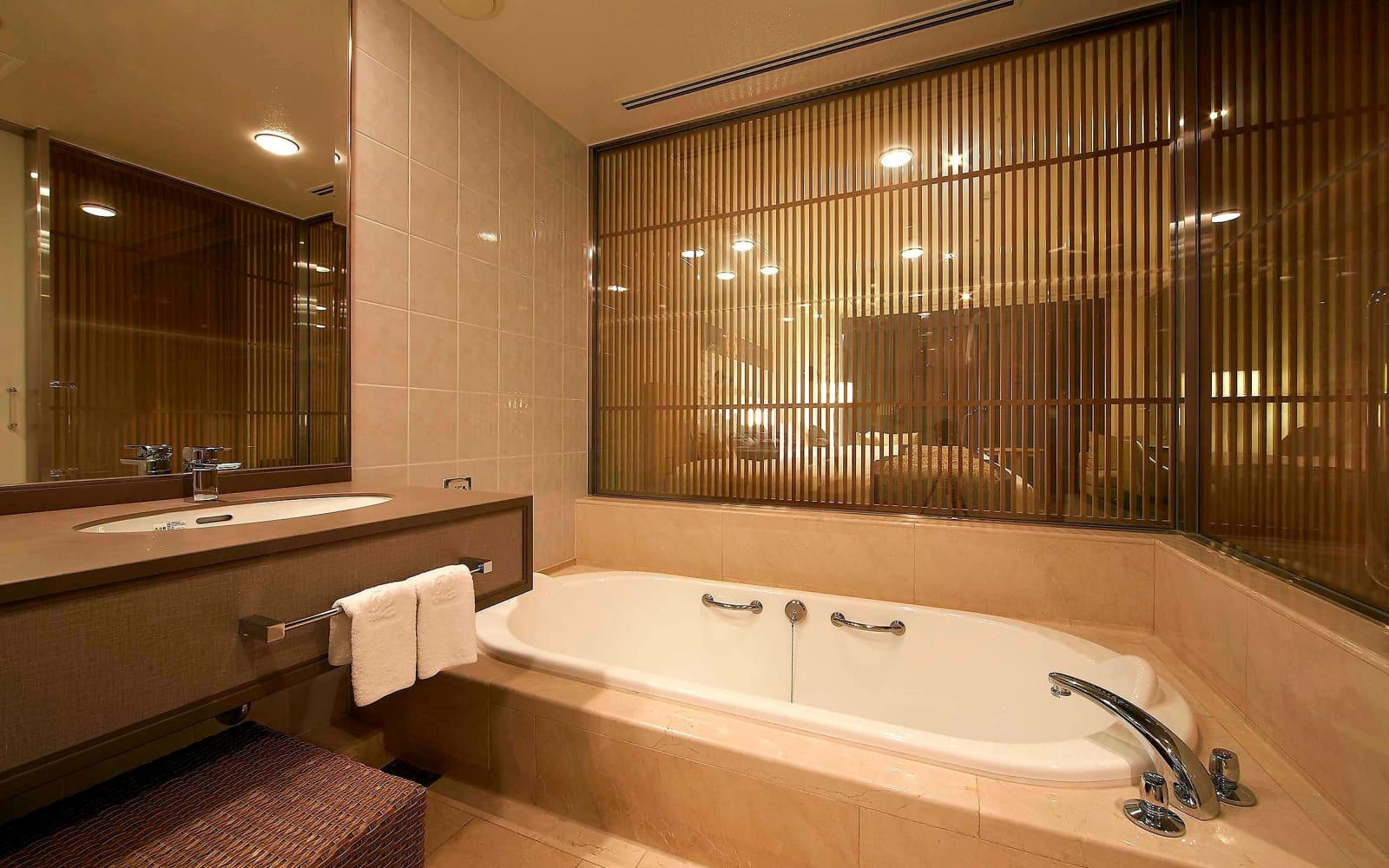
Every room type separates the tub from a walk-in shower, which is not a given in Tokyo's business towers. The tub has a jet massage function, one button and the whole bath churns. Japanese reviewers use its name, the blower bath, almost affectionately, and it is the most repeated piece of equipment in the reviews.
| Layout | Wet and dry separated: an enclosed shower plus the jet tub, and a washlet toilet |
|---|---|
| Amenities | Stay reports list Margaret Josefin products on standard floors and the 19-69 fragrance line with bath salts on executive floors; the hair dryer is a folding ReFa. Brands rotate, so treat this as a snapshot |
| In the room | A capsule coffee machine, mineral water, and tea bags including green tea and chamomile |
| Sustainability | Since 2022 the Seibu Prince group no longer pre-places single use plastic amenities; toothbrushes and combs are on request, and longer stays can opt out of daily housekeeping |
The bathroom's age is honest. The tile and counter vocabulary belongs to an earlier generation, kept clean but never photogenic the way a new opening is. The budget went into water pressure, tub depth, and that jet button instead. That is a 1998 set of values, and one soak explains it.
04 · Executive lounge
A ground floor lounge with a four part day
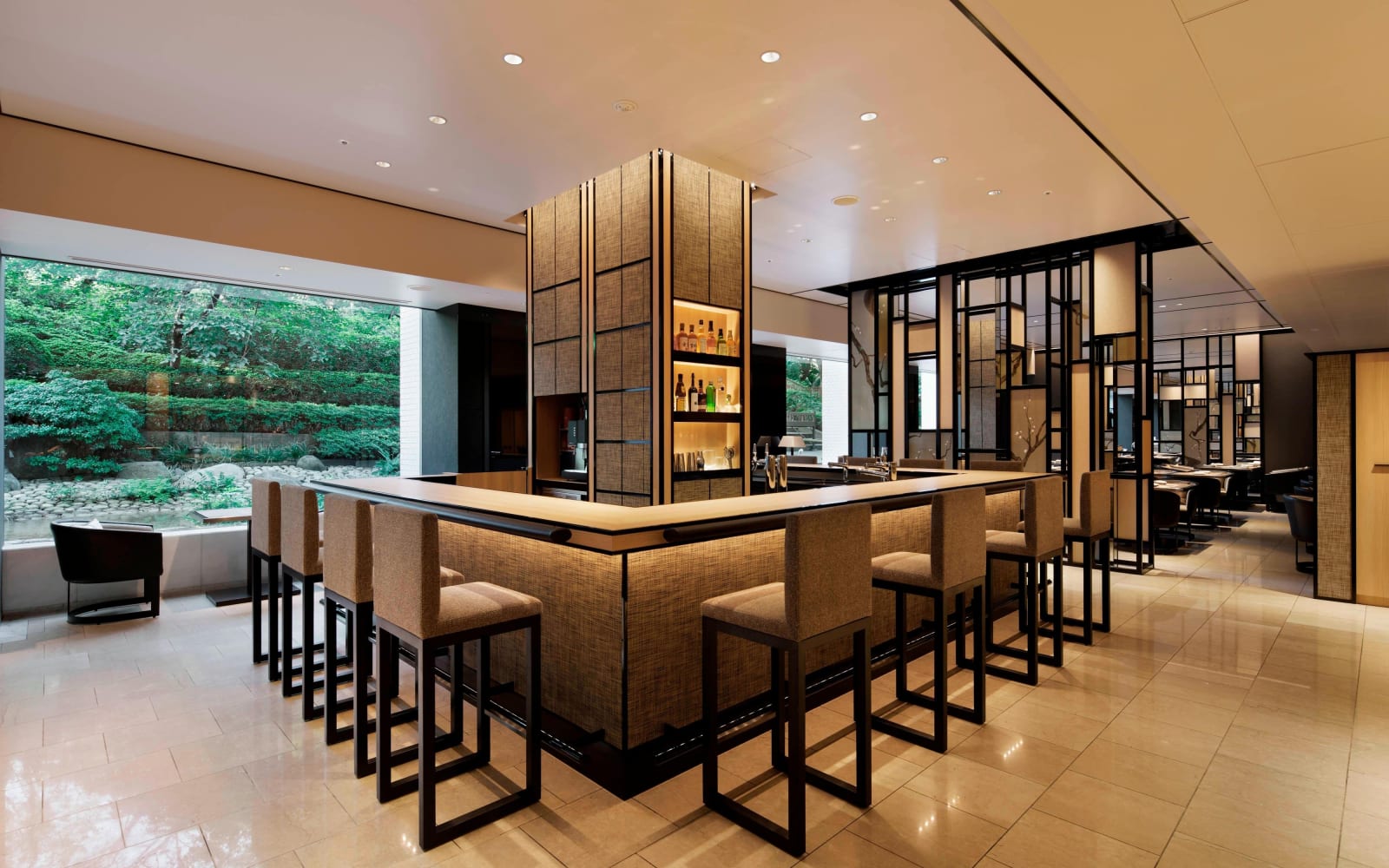
Most hotels put the lounge on the highest floor. This one puts it on the ground floor, directly opposite the Italian restaurant Ciliegio, behind an entrance discreet enough to miss on the first pass. The high floors went to guest rooms, and what the lounge got in exchange is a different view: floor to ceiling glass at garden level, eye to eye with the trees rather than above them.
| Access | Executive floor guests (floors 11 to 14) and Marriott Platinum members and above, with one accompanying guest free and about US$63 per additional person |
|---|---|
| Hours | Per the notice of August 21, 2026: Sunday through Thursday 7:00 to 21:00, extended to 22:00 on Fridays, Saturdays, and the eve of public holidays |
| Breakfast | 7:00 to 10:00, a Western buffet |
| Tea time | 10:00 to 17:00, coffee, tea, and a modest sweets selection |
| Cocktails | 17:00 to 19:00, drinks with Italian small plates: pasta, seafood starters. Portions are sized to accompany a drink; as dinner they run short |
| Night cap | 19:00 to close, dry snacks with drinks |
| Age | Children under 13 are not admitted from the cocktail hours onward. Stay reports differ slightly on the exact age line, so confirm before booking if you travel with children |
The schedule has one honest consequence. Cocktails run only two hours, and arriving late leaves you with the night cap's dry snacks. Treat it as an early evening ritual, plan dinner separately, and the expectations land where they should.
- 17:00Arrive as cocktails open. The sky is changing and the hot dishes have just come out.
- Fri, SatHours run to 22:00, late enough to come back for a nightcap after the bath.
- With childrenThe evening hours are closed to you. Breakfast and tea time work, or go straight to Ciliegio.
05 · Three hotels
One room key, three lounges
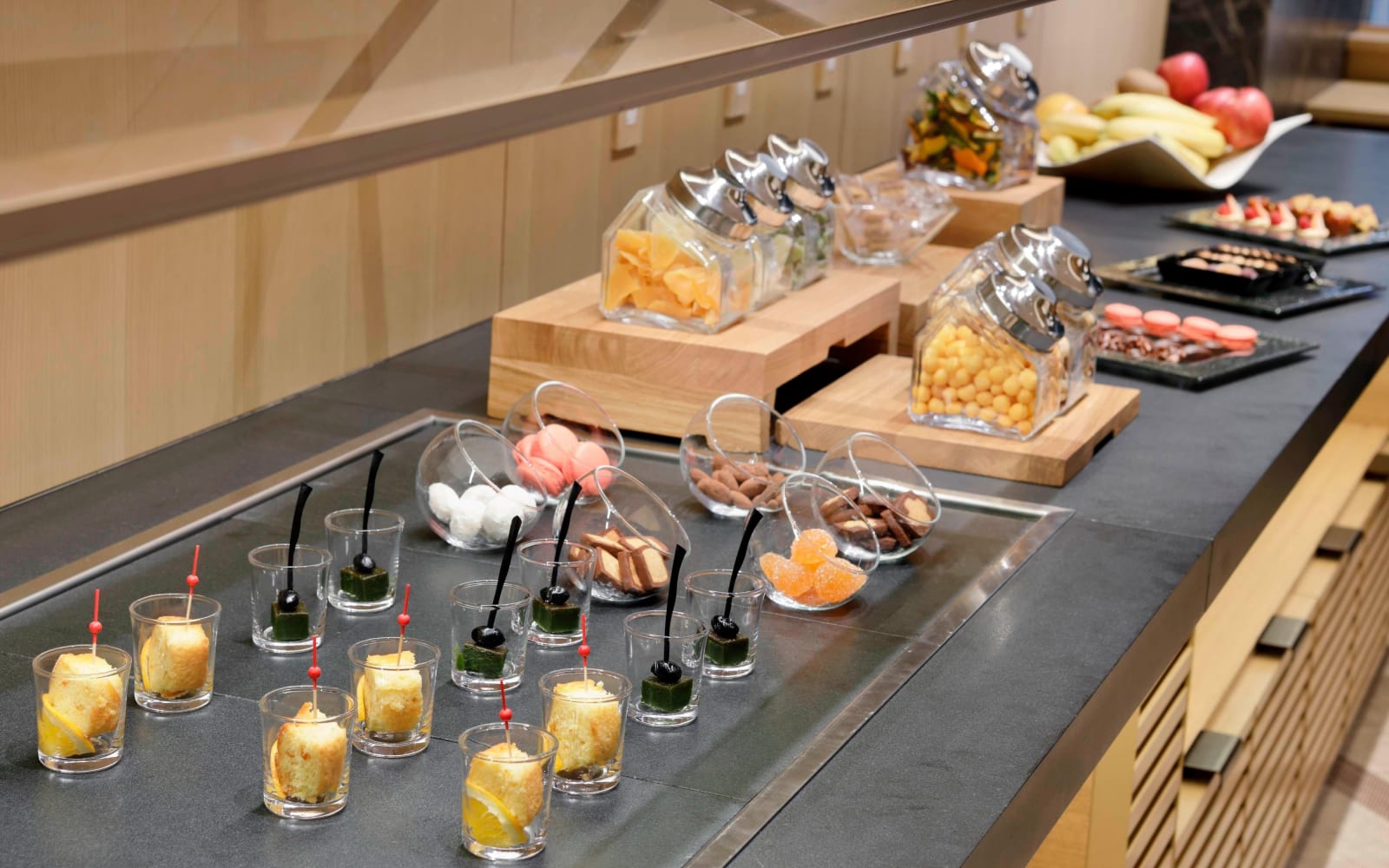
This is the property's most distinctive play: guests with lounge access can, after tea time begins, use all three lounges around the shared garden. Japanese hotel bloggers call it lounge hopping. The three have completely different characters, and a full circuit amounts to staying at three hotels in one evening.
| This hotel | The Executive Lounge, modern Italian in tone, glass at garden level |
|---|---|
| Grand Prince Takanawa, "Hanamasa" | The Japanese style lounge. Multiple stay reports agree its food is the strongest of the three: hand rolled sushi, tempura, warabi mochi |
| Grand Prince Shin Takanawa | The Club Lounge, largest of the three, five zones, with a terrace facing the garden |
| Rules | From tea time onward only; breakfast is taken at your own hotel. The walk between hotels crosses the garden, about 5 minutes |
| Eligibility note | The official page names executive floor guests and top tier members; Platinum members have extensive documented use. Policies shift, so confirm before booking |
Three hotels sharing one garden comes down to lineage. The three plots were one estate, the towers went up in three different eras, and the garden has been the same garden throughout. So the circuit follows garden paths rather than streets, with lanterns after dark.
- EveningTake the hot dishes at your own lounge when cocktails open, then walk to Hanamasa for sushi and sweets. Keep that order; Hanamasa works better as the finale.
- After dinnerCross the garden to the Shin Takanawa terrace and sit a while. It has the best sense of open air of the three.
- If it rainsStay put, and let the weather decide. The circuit is extra credit.
06 · Dining
Italian mornings, Edo evenings
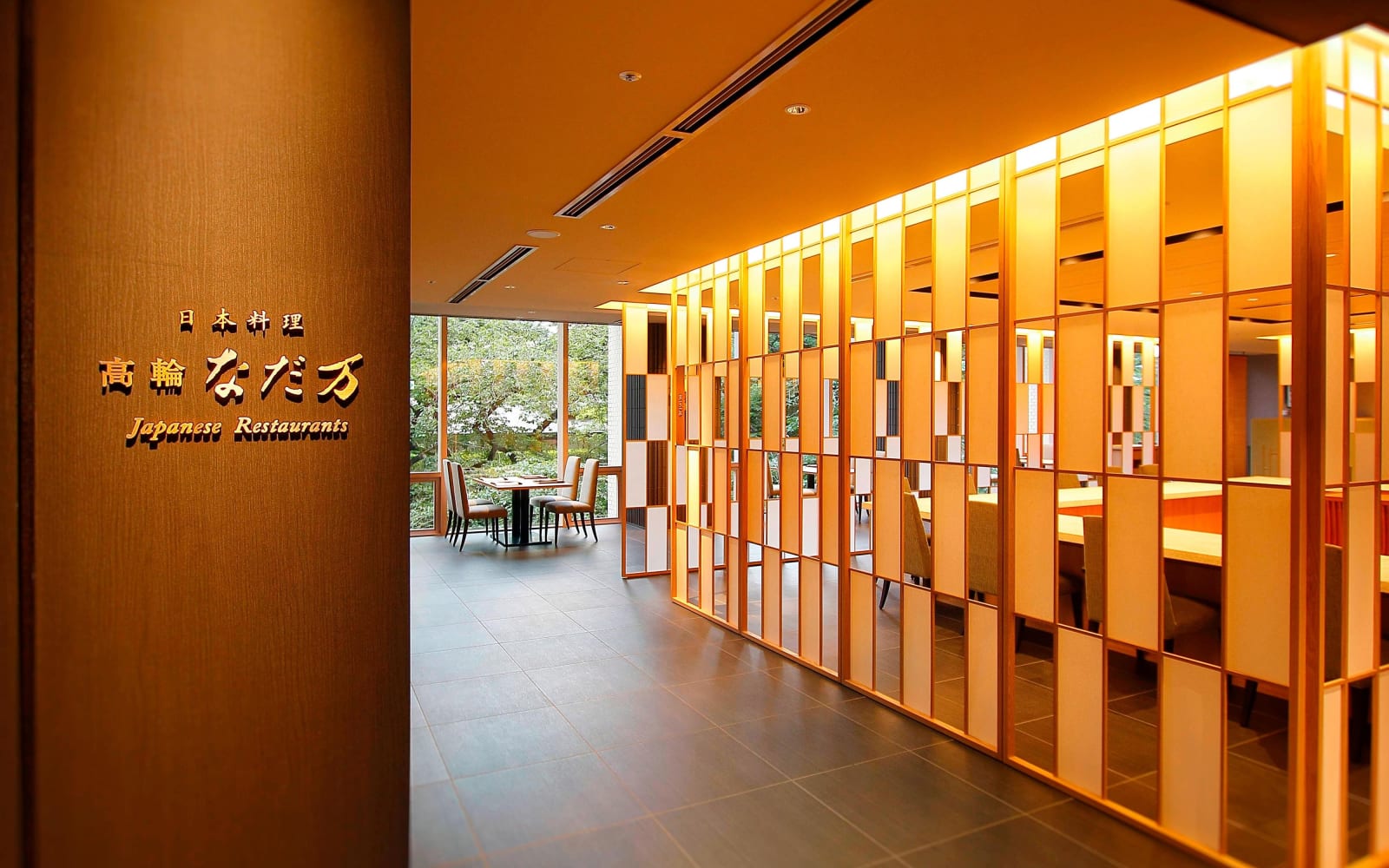
Dining here is curated rather than encyclopedic: one Italian restaurant, one venerable Japanese house, and one sushi bar operating inside it. A 288 room tower cannot feed ten restaurants, so it chose to make three count.
| Ristorante Caffè Ciliegio | Ground floor Italian. Breakfast about US$28, an American or Japanese set with eggs cooked to order; lunch, afternoon tea, and dinner also served. Ciliegio is Italian for cherry tree |
|---|---|
| Nadaman Takanawa Prime | A Japanese restaurant founded in Osaka in 1830. Kaiseki course lunches from about US$28, dinners from about US$81, with private rooms. Kaiseki is the Japanese multi-course tradition |
| Sushi Ginza Onodera | A sushi counter inside Nadaman. Dinner from about US$198, few seats |
| In-room dining | Available, breakfast from about US$16. Restaurants add a 15 percent service charge, in-room dining 18 percent |
Breakfast opinion splits cleanly in two. Service and the eggs cooked to order draw steady praise, while guests on longer stays report the selection repeats. On a stay of three nights or more, giving one morning to the options inside Shinagawa Station is kind to both sides.
The name Nadaman deserves one more sentence. Its banquet history runs from Edo era merchants to state dinners, unbroken since 1830. Eating at an old house inside a hotel spares you the reservation battle its standalone branches demand; the only risk is forgetting the depth of the institution you are sitting in.
07 · Wellness
The basement: sauna, spa, and one honest gap
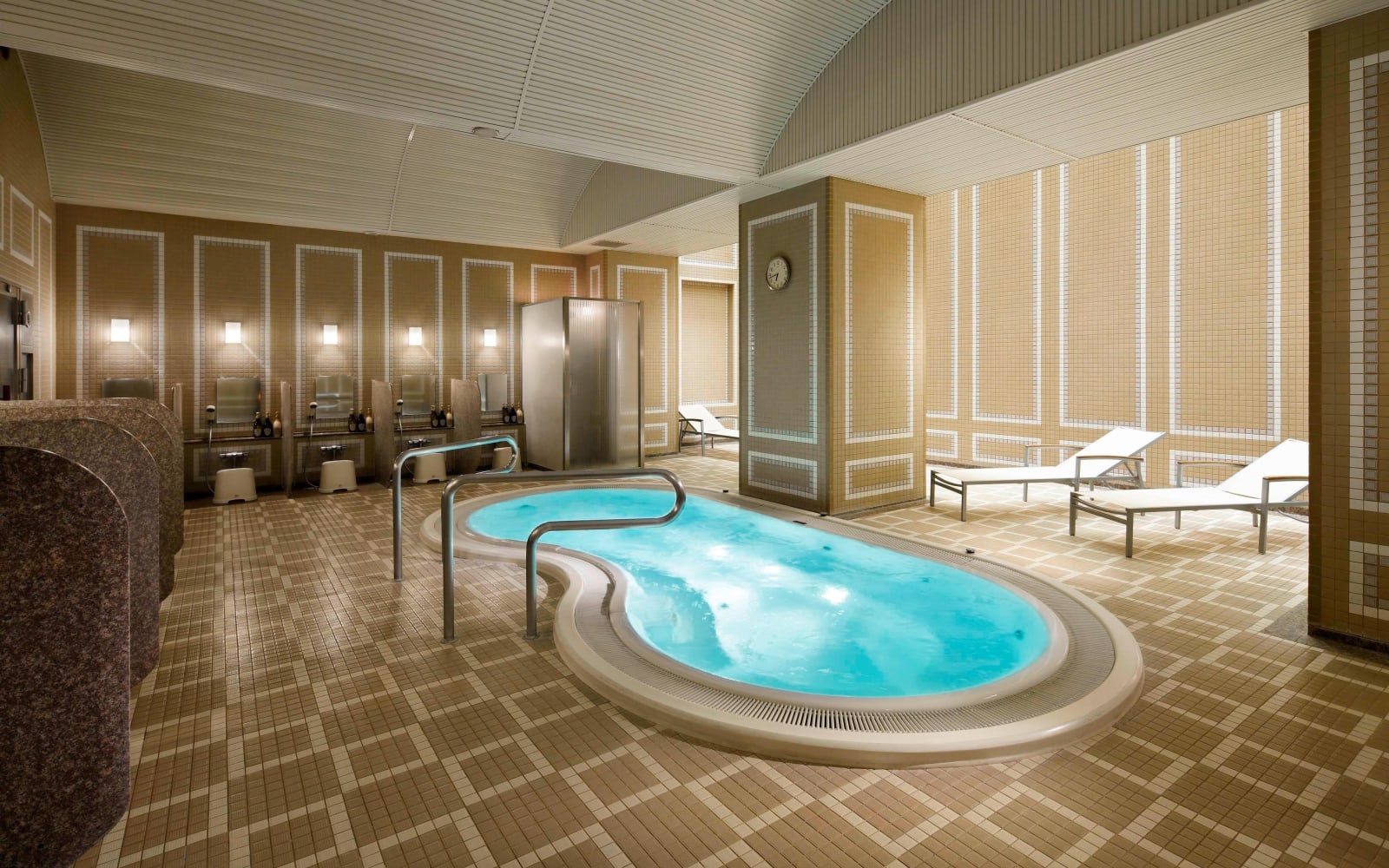
The gap first: this is not a hot spring, and there is no cold plunge pool. The basement facility pairs a dry sauna and a steam sauna with a jet whirlpool bath, separated by sex, free for hotel guests. Sauna devotees will miss the cold water stage. For anyone who simply wants to be thoroughly unwound before bed, it is exactly enough.
| Sauna and whirlpool | Basement floor. Dry sauna at 90 to 100 degrees Celsius, steam sauna at 40 to 50, and a jet bath. 7:00 to 22:30, last entry 22:00, free for guests |
|---|---|
| Rules | Bathing is nude, in the Japanese convention: wash first, and nothing comes into the water with you. Preschool children are not admitted, elementary age children need a same-sex guardian, and visible tattoos may be turned away at staff discretion |
| SPA THE SAKURA | Japanese style treatments, 11:00 to 22:00, last booking 20:30, reservations required |
| Gym | More than twenty Technogym stations, ages 18 and over, free for guests. An August 2026 notice makes it 24 hours for guests; the earlier page said 7:00 to 22:00, so confirm before you travel |
| Pool | Summer only, located at Shin Takanawa rather than in this building. A November stay does not use it; plan around it for summer |
08 · The garden
Late November, the garden changes color
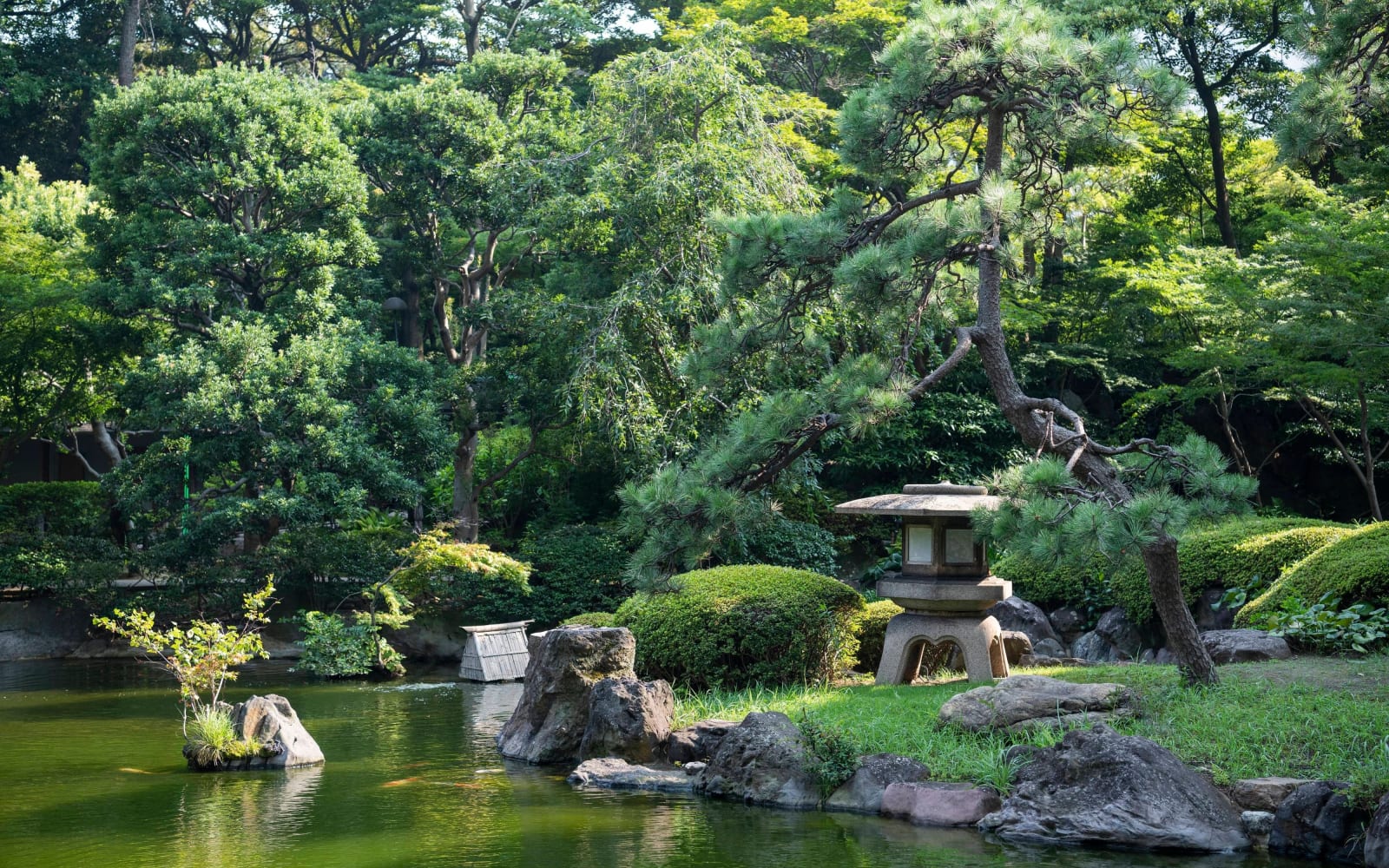
The 20,000 square meter Japanese garden sits inside the ring of the three hotels. Guests come and go freely, and the public may enter too. The official foliage season runs from late November into early December: check in around November 20 and you see the opening layers, green, yellow, and orange in one frame; for the full deep red, push the dates a week later. In spring this is a cherry blossom destination of about 210 trees across 17 varieties. In autumn it is far quieter, and far emptier.
| Area | About 20,000 square meters, shared by the three hotels, with lit paths at night |
|---|---|
| Foliage | Late November to early December. Maples and cherry leaves turn in sequence; the cherry leaves start yellowing from mid November |
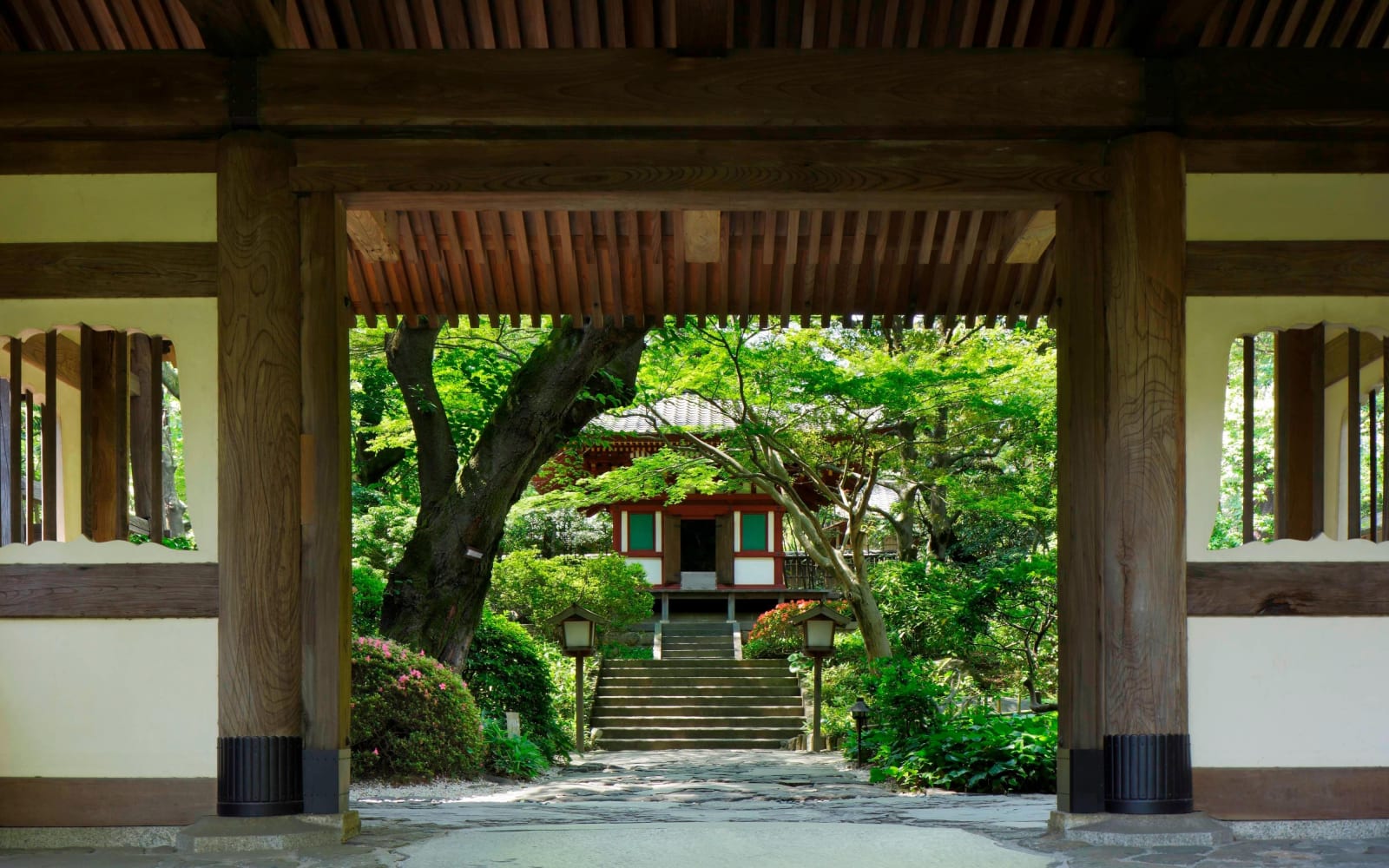
| Kannon hall | A hall attributed to the Kamakura period, moved here from Nara in 1954, housing an eleven-faced Kannon. Listed with the gate and belfry as Minato Ward cultural properties |
| Bell ringing | The belfry dates from 1656, early Edo period, and was moved from Nara in the 1950s (accounts differ on the exact year and source temple). Staff ring it daily, at 16:00 from November through February (17:00 March through October), and guests who ask on the spot may ring it by hand, free |
| At night | Bamboo lantern illuminations, recorded in stay reports from about 18:00 until late. There is also a koi pond with scheduled feedings |
| Tea house | "Kei-an," designed by architect Togo Murano, who also designed the Shin Takanawa building |
To read this garden correctly, reverse the usual order: the hotel did not build the garden, the garden was here first and the hotel was built into it. This was the grounds of Prince Takeda's residence, and the mature trees and stonework accumulated through the estate years and the relocations of the 1950s. That is how a 1998 tower comes to have a Kamakura era temple hall for a neighbor. Assets like this cannot be bought, only inherited.
- 15:30Drop the bags and go down to the garden first. Slanting light is when the leaf color is best, in person and in photographs.
- 16:00November's bell ringing time. Report to the belfry; once a day, and a miss means tomorrow.
- After dinnerWalk it again. Under the bamboo lanterns it is a different garden, with fewer people than at dusk.
- Early morningThe commuters are still down in the station and the garden belongs to the birds. No rule reserves this hour for guests; early risers simply have it to themselves.
09 · Booking
On the Fora Reserve list
As an Autograph Collection hotel it books through Marriott's LUMINOUS advisor program, and this property also carries the Fora Reserve designation. In practice: book through an advisor and the rate matches the official one, with the amenities layered on top. Same room, same rate, with perks added.
| Amenities | Daily breakfast for two, a US$100 property credit (scope confirmed case by case), room upgrade, early check-in, and late checkout (the last three subject to availability), and a welcome amenity |
|---|---|
| Current extras | At the time of checking, offers included a larger credit on stays of three nights and a discount on stays of four, varying by date; ask an advisor to confirm |
| Bonvoy Platinum and above | Lounge access (page 04), welcome points, and upgrades and late checkout subject to availability. Stay records show high floor and Tower View upgrades as common, suites as rare |
Actual quotes for November 20 to 21, 2026
Two adults, one room, native US dollar quotes pulled on August 30, 2026. Nightly totals include service charge and taxes:
| Deluxe (46 sq m) | From US$482 total per night (from US$388 before tax on OTA channels; standard and amenity channels from US$465 before tax) |
|---|---|
| Deluxe Tower View | From US$567 total (US$456 before tax), guaranteed Tokyo Tower side |
| Executive (lounge access) | From US$569 total (US$458 before tax). Nearly the same price as Tower View, so the choice is lounge or window |
| Junior Suite (from 53 sq m) | From US$873 total (US$702 before tax) |
To check the math: in any row, the before-tax rate multiplied by about 1.24 lands within a dollar of the total. The multiplier covers the service charge, 10 percent consumption tax, and Tokyo's flat per-person accommodation tax.
Why this price: November 20 is a Friday, the next three days are the Labor Thanksgiving holiday weekend in Japan, and the date sits on the front edge of foliage season. The same room runs meaningfully lower on plain weekdays; seen the other way, this rate buys the holiday weekend and the leaves together.
10 · Published reviews
Where it wins, where it ages
Tripadvisor 4.5, Rakuten Travel 4.63, Ikyu 4.56, high and stable for years. The praise clusters on space, service, and the garden. The deductions point, almost without exception, at one coordinate: age.
Repeated praise
- 46 square meter rooms read as unusually large for Tokyo, and the sound insulation draws positive comment
- The jet massage tub, the signature keyword of the Japanese reviews
- The garden's quiet: greenery in the middle of the city, with winter illuminations and koi feedings
- Service detail: regulars greeted by name, anniversary champagne, and a documented case of a proactive upgrade and late checkout after a canceled flight
- Shinagawa Station close by, with clean lines to the Shinkansen and Haneda
- The turndown weather card and chocolate, small gestures mentioned again and again
Repeated deductions
- The decor's age shows; one English review described the bathroom as belonging to an earlier generation
- The lounge's food is called out as weak by seasoned members, with little daily variation
- Breakfast repeats on longer stays
- The pool is at the neighboring hotel, summer only, and charged separately, a sore point in member reviews
- The "3 minutes on foot" gap: uphill with luggage it is closer to 6
11 · Around
Shinagawa's convenience, Takanawa's memory
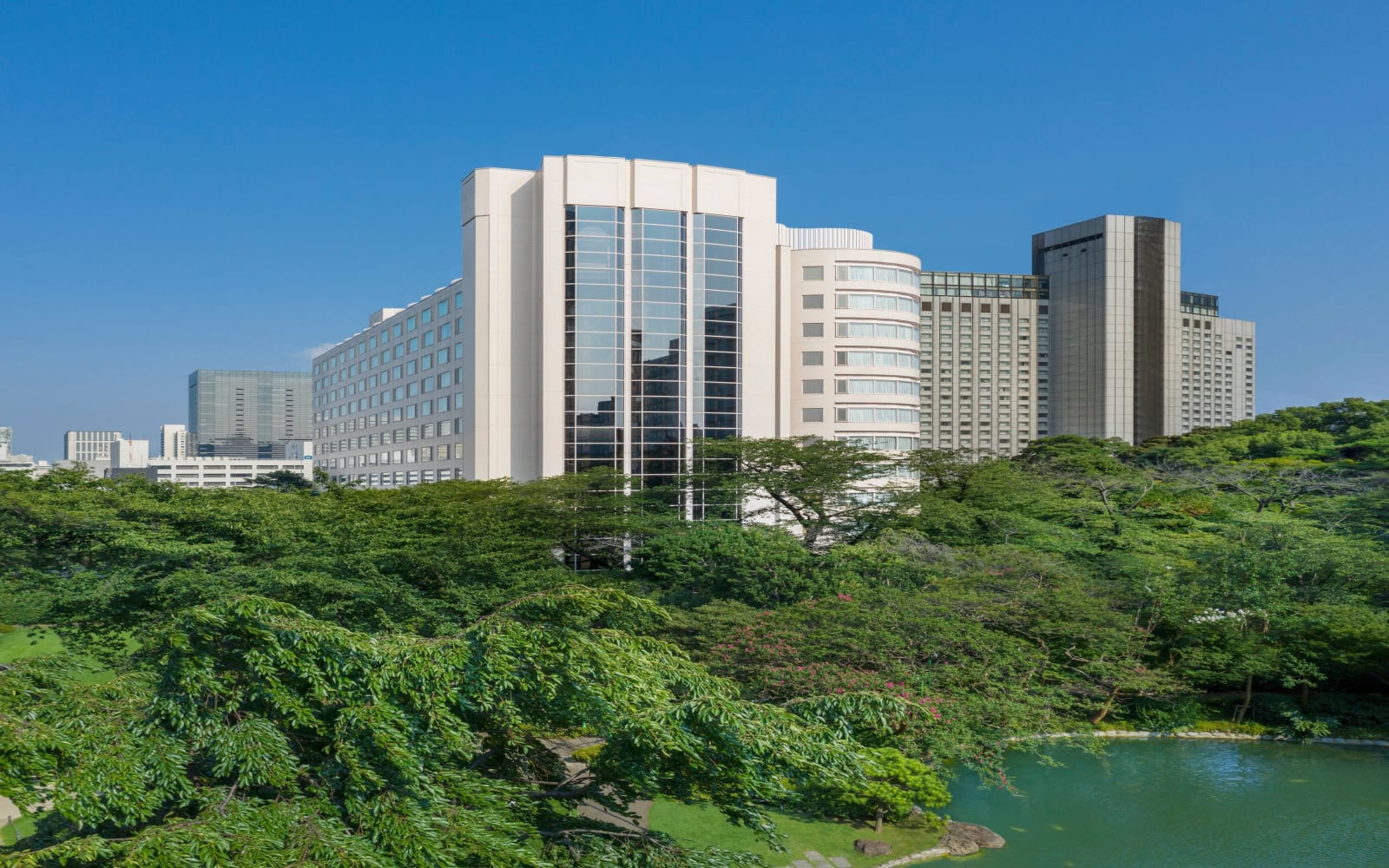
The location pairs two things: the strongest interchange on the Yamanote line at the bottom of the slope, and Edo period memory at the top. Which direction you walk decides whether this night is a waypoint or a destination.
| Shinagawa Station | 3 to 6 minutes on foot. Shinkansen, the Yamanote line, and the Keikyu line to Haneda; the in-station ecute mall covers bento and pastry needs for a whole trip |
|---|---|
| Sengakuji | About 15 minutes on foot by the hotel's own count. The resting place of the forty seven ronin, whose 1702 revenge story, Chushingura, is Japan's most retold loyalty tale. Go early, before the incense is outnumbered by tour groups |
| Takanawa Gateway City | JR East's flagship development, opened March 2025, still growing new blocks; a JW Marriott Tokyo opened here in October 2025 |
| Same group alternatives | Grand Prince Takanawa and Shin Takanawa across the garden, a price band lower with smaller rooms; only this tower carries Marriott affiliation |
One comparison worth filing away: the JW Marriott at Takanawa Gateway now puts Marriott's own top brand inside walking distance of the Sakura Tower. A brand new high-rise on one side of the slope, a 1998 tower inside a garden on the other, two answers from one company. The hotel map of this district over the next few years will be the most interesting board in Tokyo.
12 · Little known
Princes, a tax bill, and a garden older than the hotel
1. Prince is meant literally
In the late Meiji era this plateau held the residences of imperial princes: this plot belonged to Prince Takeda, the Shinagawa Prince stands on the Mori marquess estate, and Shin Takanawa's annex rose on the former Kitashirakawa residence. In 1947 the collateral branches of the imperial family lost their royal status, and the property taxes that followed crushed them. Yasujiro Tsutsumi of Seibu bought up several of the estates and turned them into hotels, the first being the former Asaka residence in Karuizawa. The brand took the name Prince because the land, literally, had been the homes of princes.
2. The guest house in the garden, and a discouraged architect
Beside the garden stands the Western style residence built for Prince Takeda in 1911, today the Kihinkan guest house of Grand Prince Takanawa. Its architect was Tokuma Katayama, the court architect of the Akasaka Palace, now Japan's State Guest House. The story goes that when the Meiji Emperor saw the finished palace he pronounced it too extravagant, which wounded Katayama deeply, and the Takeda residence two years later is read as his quiet recovery. It opens mainly for weddings, but the neo-Baroque facade seen from the garden side is the best free stop on the whole walk.
3. The name comes from a slope
The name Sakura Tower is borrowed directly from the slope in front of the hotel, Sakura-zaka. The cherry trees on the plateau date to the estate years, and every late March the slope and the garden bloom together. A November visitor sees the same trees in their other color.
4. Why there is a temple hall in the garden
The garden's Kannon hall and gate are attributed to the Kamakura period and were moved here from Nara in 1954; the belfry was built in 1656 and moved in the 1950s (the official release says 1959 from Chokyuji temple, another account says around 1954 from Nenbutsuji, so the records disagree). This was how the Tsutsumi era collected. Whole historic buildings bought, dismantled, shipped to Tokyo, and reassembled. In 2021 all three were designated cultural properties of Minato Ward, and the collecting became preservation. The structures a guest strolls past before breakfast are older than the entire Prince brand.
13 · The plan
One night here, and who it is for
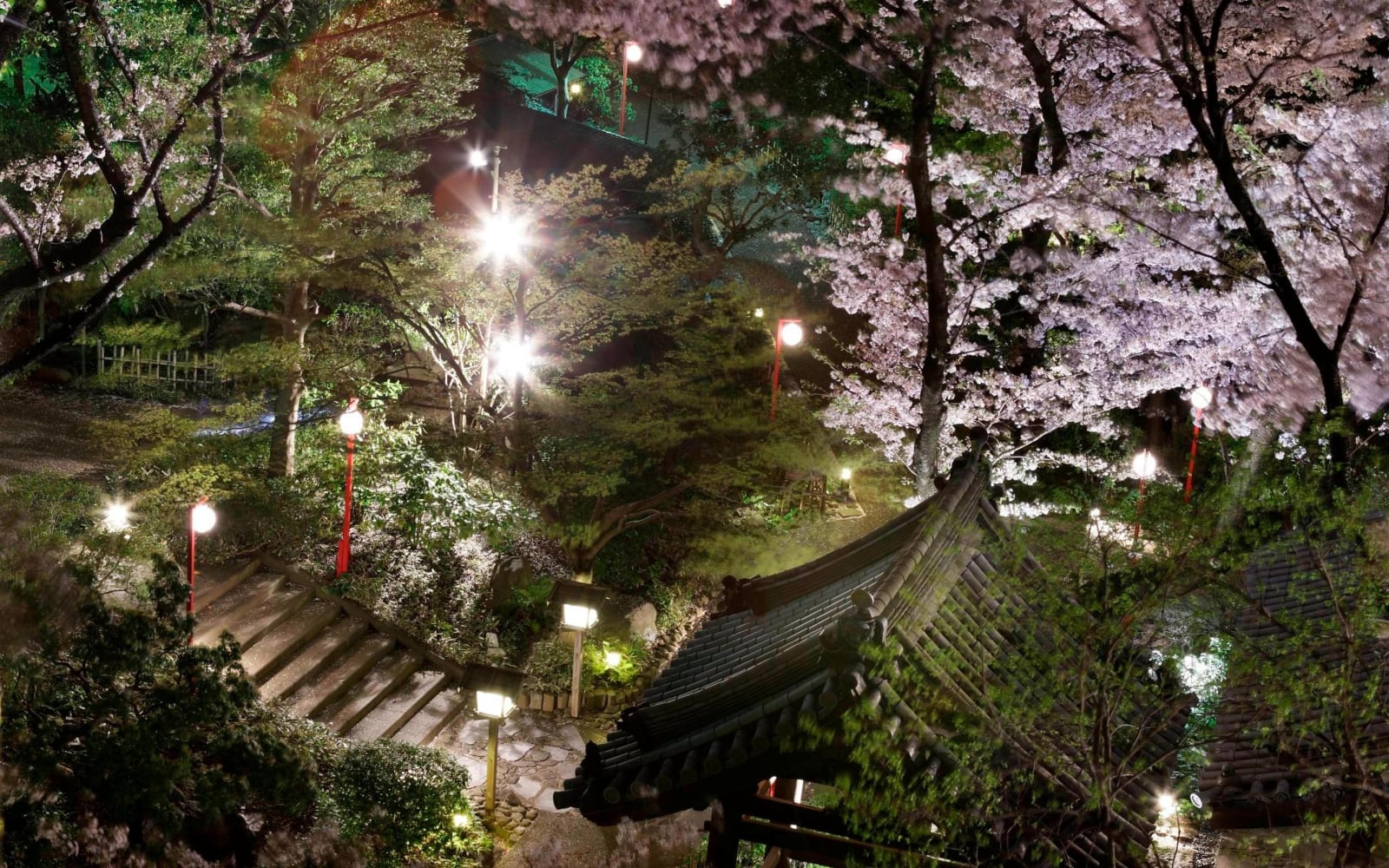
The November version, built around a Friday, November 20 check-in. One governing principle: walk the garden three times, at dusk, at night, and at first light. The three walks are three different gardens.
- 15:00Check in. If the view matters, confirm the orientation at the desk.
- 15:30Garden first. The leaf color is best in slanting light, and the Kihinkan facade is on the way.
- 16:00Bell ringing at the belfry. In November it is four o'clock, once a day.
- 17:00Lounge cocktails open. Hot dishes just out, sky mid-change.
- 18:30Walk to Hanamasa for the finale, or to your Nadaman reservation.
- 20:00The bamboo lanterns are lit. Garden, second pass, nearly private.
- 21:00Basement sauna and jet bath, last entry 22:00.
- BedtimeThe in-room jet tub is the version for those done with going out.
- 7:30 next dayBreakfast at the lounge or Ciliegio, then the garden's third pass.
- 12:00Checkout at noon. No hurried morning.
Book it if
- You use Shinagawa as a hub: day trips to Kyoto or Osaka by Shinkansen, Haneda in and out, and yet you sleep beside a garden
- You want space: rooms from 46 square meters have almost no peers at this price point in Tokyo
- You like hotels with a story: an imperial estate, relocated temple architecture, and an 1830 restaurant under one roof
Do not if
- You want new-opening polish. This is a 1998 building with 2013 interiors
- You plan to make dinner out of the lounge. The cocktail hour portions accompany a drink
- You are coming in summer for the pool: it is at the neighboring hotel, seasonal, and charged separately
The choices around Shinagawa will keep multiplying, and the new towers will keep getting taller. This hotel's answer was written in 1911: a tower can be rebuilt, but a garden cannot be grown back.
This piece is written prospectively: what you will encounter, not what I encountered. Facilities, hours, and rules are compiled from hotel and group notices (including the operational changes of August 21, 2026), published stay reports, and platform reviews. I have not stayed at this property and nothing here is presented as first-hand experience. Rates are quotes pulled on August 30, 2026 for a November 20, 2026 check-in, in native US dollars; amounts marked "about" are converted at roughly 160 yen per dollar on the same date (XE mid 160.10, TradingEconomics 159.97). Reported closure timing for Shin Takanawa varies, lounge age rules differ between accounts, and the belfry's relocation year and source temple are recorded differently across sources (1959 from Chokyuji versus around 1954 from Nenbutsuji); all are presented side by side in the text. Foliage timing moves with the weather, so confirm with the hotel before booking. Photographs come from the property's official gallery on the Fora advisor portal rather than from advisor submissions; where a shot was taken in another season it is noted in the caption.
What the advisor channel actually gets you →
Shinagawa and Takanawa · autumn 2026 series
Overview · Hotel (this page) · Sights · Food · 30 minutes · Autumn leaves